Tokyo Wire
Households in Britain are bracing themselves as the Bank of England is looking set to raise interest rates - and it will mean millions of households face higher mortgage costs next year. The Monetary Policy Committee (MPC) meet to vote on Thursday, with analysts widely set on expecting a hike from 3.75 per cent to 4 per cent - the first time the Bank would have raised rates in more than three years. And with 2.3m households in the UK set for a mortgage renewal across the course of 2027 - nearly half a million homes more than did so this year - it will mean a particularly big jump for those who secured five-year fixes in the first half of 2022, just as interest rates started to run higher in the wake of Russia’s invasion of Ukraine.
At the time, interest rates were sat at around just 1 per cent, while the average two-year mortgage fix was 3.25 per cent and a five-year fix was 3.37 per cent on average, per Moneyfacts data. On a £200,000 mortgage with a 25-year term, that means monthly repayments on a five-year fix at the average rate would have gone from around £986 in 2022 to £1,289 now on a like-for-like deal - more than £3,600 a year more. In reality, those arranging deals five years ago will likely have paid off a chunk of the total debt, though monthly repayments are still likely to rise notably.
Mortgage rates have been rising across the past few months, with the average five-year fix tipping over 6 per cent a month ago and remains at that level at the start of November. Interest rates have soared since 2022 (Bank of England) However, a boost to the market will come on Tuesday, when Barclays will cut some of their residential mortgage deals. Prices across the mortgage market are typically based on swap rates - essentially future expectations of interest rate movements - rather than the base rate itself.
Invest at least £100 in Stocks or ETFs of your choice. Get fractional shares worth £50! Terms and conditions apply.
Go to website ADVERTISEMENT Invest at least £100 in Stocks or ETFs of your choice. Get fractional shares worth £50! Terms and conditions apply.
Go to website ADVERTISEMENT Some market estimates are accounting for up to four hikes in total, with the yield on two-year gilts currently at 4.8 per cent. While the UK economy is still stuttering and growing less than might be hoped, the Bank of England (BoE) faces a tricky run of decisions. Cutting rates is one tactic used to stimulate faltering economies - but presently in the UK, it is the fear of inflation which looks likely to take precedence, requiring at least one rates raise instead.
Interest rates were last rising in response to the energy price shock caused by Russia’s invasion of Ukraine, across 2022 and 2023. The final hike came in August 2023 - 38 months ago - to a high point of 5.25 per cent, and since then the BoE has voted for six decreases, the last of which came just before Christmas 2025. A rise now, then, would be a boost to savers who could get a better return on their money - even while it could be problematic for those who have to renew mortgage deals in the coming months.
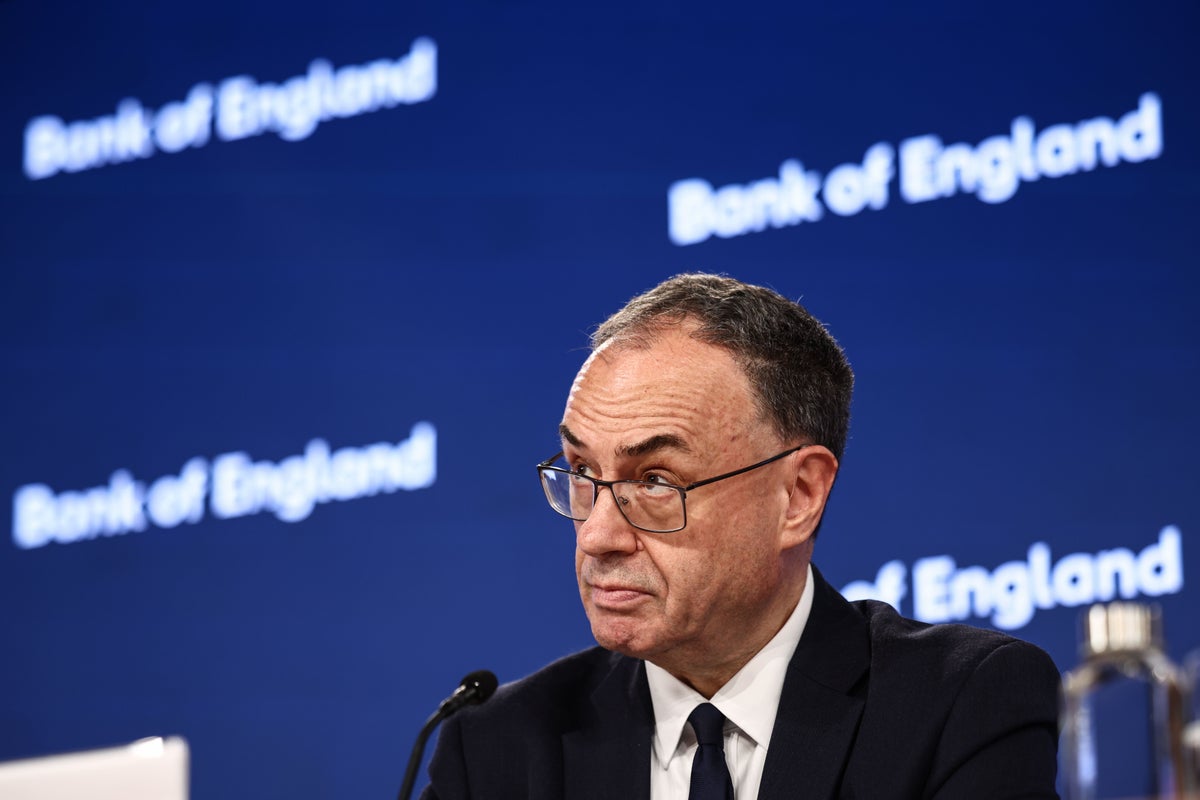
The top easy access savings accounts currently offer 5 per cent interest, but only for limited amounts or timeframes. Barclays analysts expect a 7-2 vote in favour of a hike this time, while RSM UK’s chief economist Thomas Pugh believes it could be slightly closer at 6-3. Governor of the Bank of England Andrew Bailey (PA Wire) A lingering issue for households and businesses alike is that this may not be the only hike of the cycle.
Barclays analysts Jack Meaning and Cian Hennigan wrote in a research release last week that they see energy inflation meaning another rise early next year. “We continue to expect a final 25bp hike in February 2027, conditional on the conflict in the Middle East not having found a lasting resolution. As discussed above, this final hike could be framed as a response to the direct energy price shock and/or prudent risk management,” they wrote.
“However, we would expect the MPC to say, either explicitly or implicitly through its commentary on the central forecast and scenarios, that further hikes would depend on seeing evidence of second-round effects beginning to build.” Energy inflation is particularly problematic because it feeds into different areas to push up prices elsewhere: transport, food production, manufacturing and household bills, for example. That could be an even greater issue for British households at this time of year. Research from European neobank Bunq reports one in four people put away less than 5 per cent of their income in a typical month as savings, but almost half (42 per cent) save less or nothing at all across the Black Friday and Christmas period.
Indeed, a quarter (23 per cent) have to actively draw from their savings to fund the season and a predictable three-quarters (74 per cent) of people expect to spend more over the wider festive period. Bunq’s Joe Wilson urged households to build festive spending funds “across the rest of the year” to avoid overspending from single paydays across November and December - which is a particularly helpful habit to build while rates are higher, enabling savers to earn even more interest on their cash.
Source: The Independent